



Guide for Latino parents: how public schools work in Canada, from the first day of classes to graduation
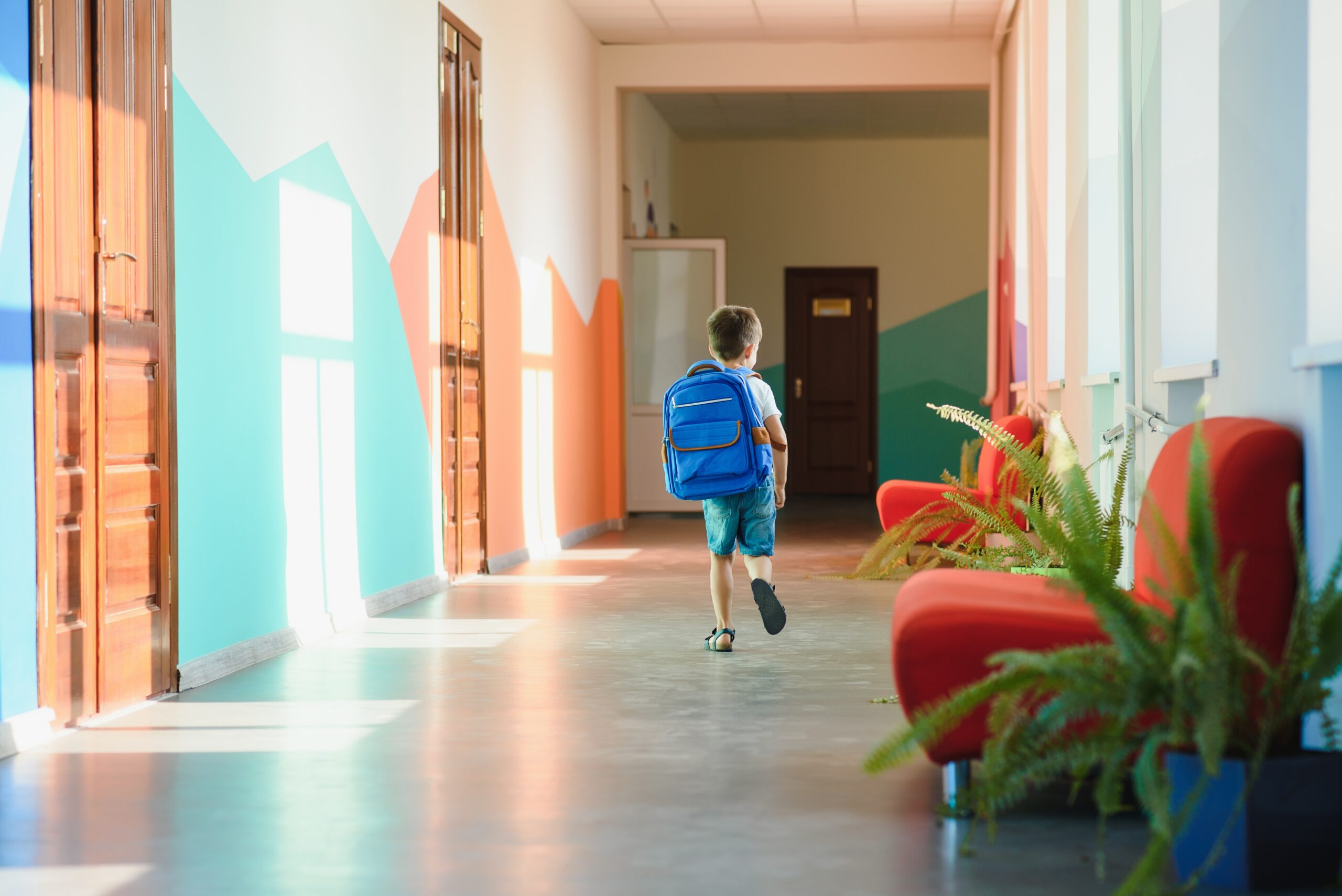
For a family newly arrived in Canada, or even one that has been here for a couple of years, the school system can feel like a language separate from the English language itself: there are credits instead of years completed in a block, “streams” instead of a single path to university, and its own vocabulary (JK, ESL, OSSD, OYAP) that almost no one explains upfront. This guide brings together, in one place, what a Latin American parent needs to understand to support their child from the first day of school to graduation, whether their child is starting school in Canada for the first time or has already been in the system for some time.
How is school organized in Canada?
Public education in Canada is free and compulsory, and in most provinces, any child can attend regardless of their parents’ immigration status. The system has a total of 13 years: one year of kindergarten (in Ontario, this is divided into two years: Junior Kindergarten at age 4 and Senior Kindergarten at age 5) and then grades 1 through 12. Approximately 91% of students in Canada attend a public, tax-funded school; the remainder attend private school or are homeschooled. The school year begins in late August or early September and ends in June, with classes held Monday through Friday.
This guide focuses on Ontario because that’s where a large portion of our readers live, but it’s worth noting that each province organizes its system differently. Quebec, for example, has a distinct structure: six years of primary school, five years of secondary school, and then CEGEP, an intermediate program between high school and university that doesn’t exist in the rest of the country.
What is different compared to what many Latin families know about their country of origin?
There are several differences that often surprise newly arrived families. The first is that in Canada, students almost never repeat a whole year: if a student is struggling, the usual response is to provide additional support (remedial classes, accommodations, a special education plan) rather than making them repeat the entire grade, something much more common in several Latin American countries.
The second is the credit system: in Ontario high school, each passed subject is worth one credit, and the student needs to accumulate 30 credits over four years to graduate, instead of passing “the year” as a single block.
The third point is that there isn’t a single exam at the end of high school that determines university admission, like the ICFES in Colombia, the EXANI in Mexico, or the ENEM in Brazil. In Canada, what counts for university admission is the average of the specific subjects the student took in the last two years of high school, which means that the subjects chosen from grade 10 or 11 onward carry much more weight than they might initially seem.
How does my child choose their path within the school?
Until 2022, Ontario divided students from grade 9 onward into two separate tracks, “academic” or “applied,” in subjects such as math, science, English, and geography. The province eliminated this division in grade 9 because several studies, including research by Carl James at York University on Black students in the Toronto region, showed that the “applied” track disproportionately enrolled Black, Indigenous, and low-income students, closing doors for them later in life without their families often realizing it was happening.
Today, all ninth-grade students take the same level of subjects, but the “academic” or “applied” division reappears in tenth grade. The most important long-term differentiation comes in eleventh and twelfth grades, when those same subjects are coded directly according to their preparation: “university” (designed for university admission), “college” (designed for technical or community college), or career-oriented courses. This choice matters: a student who only takes “college” level subjects in eleventh and twelfth grades generally cannot apply directly to university without taking “university” level courses later on. It is worthwhile for Latino parents to ask the guidance counselor directly, starting in tenth grade, what level their child is taking in each subject and what opportunities that choice opens or closes.
There is also a fourth path, the Ontario Youth Apprenticeship Program (OYAP), available from grade 10, which allows a student of at least 15 years of age and with 14 credits to begin training in more than 140 trades (electricity, plumbing, cooking, hairdressing, technology, among others), gaining paid practical experience while completing their diploma, without this preventing them from continuing to study afterwards if they change their mind.
What if my child doesn’t speak English or struggles with the language?
Schools assess a student’s English proficiency upon enrollment, along with their reading and writing skills in their native language. Based on this assessment, they place the student in one of two programs: ESL (English as a Second Language), for those who already read and write well in their own language and need to build English vocabulary and grammar; or ELD (English Literacy Development), designed for children with interrupted schooling or no prior formal education, who require more intensive support because they are learning to read and write simultaneously with learning the language.
Support takes many forms: small classes with a specialist, a tutor working alongside the regular classroom teacher, welcome programs for newcomers, or adapted assessments as the student progresses. As a realistic guideline, conversational English is usually achieved within one or two years, but academic English (the kind needed to read a textbook or write an essay) can take five to seven years to fully master. Experts emphasize a point many parents don’t expect to hear: maintaining a strong home language helps, rather than hinders, English learning, so there’s neither the need nor the benefit of stopping speaking to a child in Spanish at home.
How do I register my child for the first time?
Enrolling a child in a public school in Ontario is free and does not depend on the parents’ immigration status. You will need to bring a document confirming the child’s age (birth certificate, passport, or other identification or travel document), proof of address (an Ontario photo ID, or a utility bill or lease agreement in the parent’s name), and the child’s immunization record, if available. Missing immunizations do not prevent enrollment: public health facilities offer free immunization services. If someone other than the parent is enrolling the child, a document proving custody or legal guardianship is also required.
Registration can be done at any time during the school year, except for kindergarten, whose registration typically opens in January or February for the following September. Each school board has a tool on its website to find out which school a child is assigned to based on the family’s address.
Is there any help available besides the school itself?
Yes, and it’s usually free. The Settlement Workers in Schools (SWIS) program, available in many Toronto-area schools, connects newly arrived families with a settlement worker who helps with the school transition, explains the system, and provides guidance on practical matters such as finances, housing, and tenant rights. Many schools automatically refer families as soon as their child enrolls. For high school students, some organizations also offer a week-long orientation before classes begin, designed to help students arrive on the first day with a basic understanding of how their new school operates.
What does it take to graduate from high school in Ontario?
To earn the Ontario Secondary School Diploma (OSSD), a student needs a total of 30 credits, including both required and elective courses, with some adjustments depending on the year they started Grade 9; 40 hours of community service or volunteer work; and to pass the Ontario Secondary School Literacy Test (OSSLT), which offers alternatives for those who don’t pass on the first attempt. Students who started Grade 9 in 2024 or later must also pass a financial literacy module within the Grade 10 Career Studies course. None of these requirements are intuitive for a family coming from a different educational system, so it’s worthwhile to ask the school early on for a clear roadmap of how many credits the student has earned and which ones they still need to complete.
The first year at a new school, in a new language, is difficult for any child, and also for parents trying to understand a system that no one explained to them from the start. No question about credits, streams, or ESL is a silly question, and asking it in a timely manner (to the school counselor, the ESL teacher, the settlement worker) is often the difference between a child who navigates the system well and one who misses opportunities without anyone noticing in time.
Editorial Staff Mauricio Navas Talero LJI Reporter