



Trade negotiations between Canada and the United States collapse, and Carney orders retaliatory tariffs.
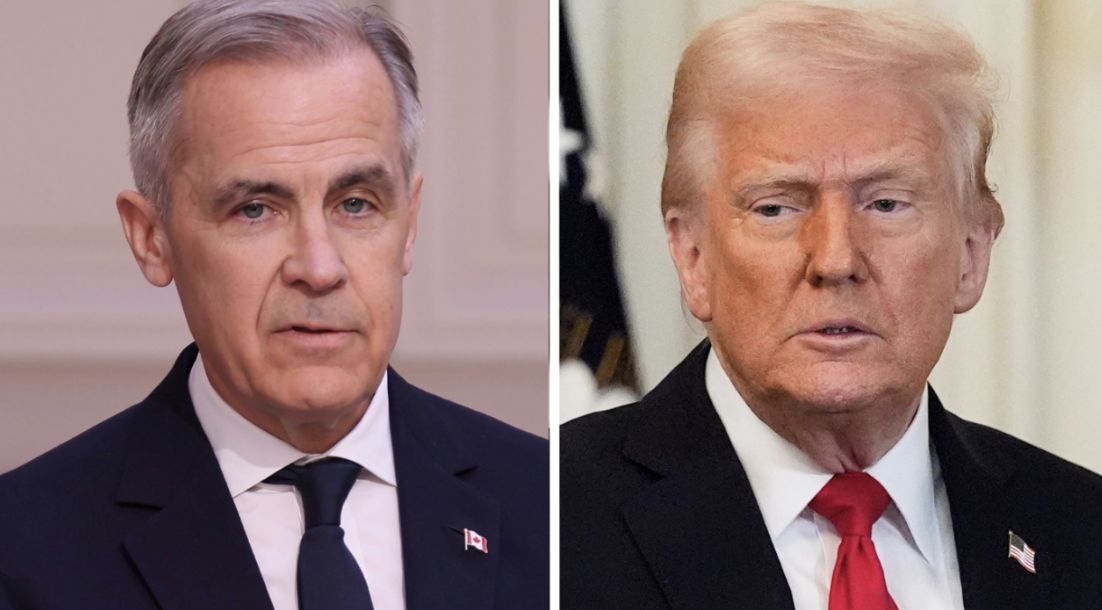
On the night of Friday, August 21, trade negotiations between Canada and the United States, which The Spanish Media has been following week after week, broke down. First, there was a three-day pause announced by Trump, and then a supposed agreement on August 19. This time, there was neither a pause nor an agreement: hours before a deadline, Washington imposed a 50% tariff on $20 billion worth of Canadian goods, and Prime Minister Mark Carney responded by suspending talks and announcing retaliatory measures.
What exactly happened that night?
According to NPR, negotiations collapsed minutes before midnight on Friday, August 21, when the United States tightened its offer. Hours later, on Saturday the 22nd, Carney appeared publicly: he said he had ordered his negotiating team to return immediately to Ottawa and confirmed that Canada would once again be subject to the 50% tariff that had already been postponed twice in recent weeks.
Why did the negotiation break down, according to Carney?
“In recent days, the United States proposed new terms that were uneconomical, unfair, that undermined the net benefits for Canada, and that called into question the reliability of any agreement,” the prime minister said, repeating almost verbatim in his official address and in statements to the press. Carney went further: “Canada has what the world wants. And we will not allow any one nation to determine our future.” According to his office, among Washington’s last-minute demands were conditions regarding the protection of the French language and Canadian culture, a point Ottawa was unwilling to negotiate.
What does the United States say?
Washington’s version is different. US Trade Representative Jamieson Greer maintained that it was Canada that “refused to finalize the trade agreement” and that Ottawa arrived with “new demands and reversals,” despite the fact that the United States had already offered concessions on steel, aluminum, automobiles, and lumber. Neither side has yet set a date to resume negotiations.
What does this mean for Hispanics living and working in Canada?
As we’ve been reporting in these pages since this story began, a huge portion of Canada’s production is destined for the U.S. market, so a disruption of this magnitude isn’t just a distant diplomatic discussion: it impacts the factories, farms, and wineries where a large part of the Latino community works, and it affects the price of everything made with steel, aluminum, or auto parts. Carney has already announced the retaliatory tariffs that Canada will apply starting September 8, so the next sign to watch is whether that date is met or if there’s still room for emergency negotiations.
For now, after weeks of pauses, promises and deadlines being pushed back, the negotiation between the two countries is formally halted, with no meetings scheduled.
Editorial Staff Mauricio Navas Talero LJI Reporter